|
Hoploparia sp.? |
A very small number of the chalk lobsters encountered in museum collections cannot be comfortably referred to either P. sussexensis or E. leachii. These instead resemble Hoplaria, a genus well known from the Gault Greensand (Aptian-Albian) which predate the Grey Chalk. These specimens can be identified by their flattened nature, keeled margins, elongate palms which broaden towards the fingers, lack of coarse thorny ornament and presence of fine granular ornament. The carapace is presently unknown. A formal description of this varied material is wanting and the number of species warranted is unclear.
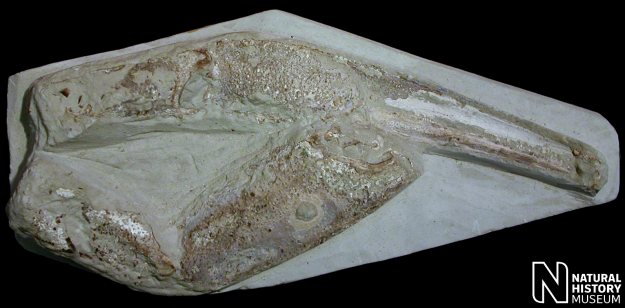
1). Hoplaria sp.? A pair of claws displaying well the characters which distinguish this material from other specimens encountered in the Chalk (Grey Chalk, Folkestone, Kent (x1.4, BMNH (British Museum (Natural History) London) In.27874). Image © 2007 The Natural History Museum, by kind permission. ((
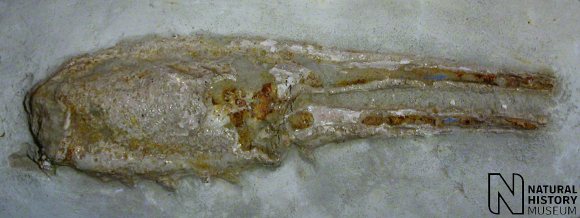
2). Hoplaria sp.? An isolated cheliped (Burham, Kent (x1.2, BMNH (British Museum (Natural History) London) 46404). Image © 2007 The Natural History Museum, by kind permission.
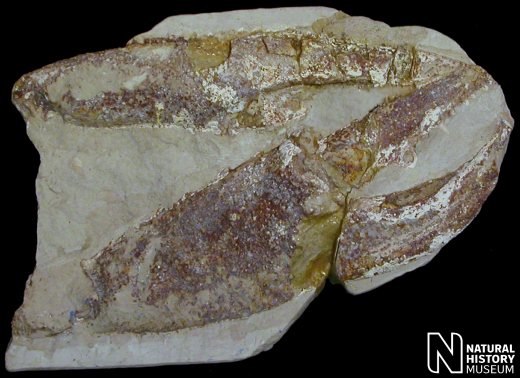
3). Hoplaria sp.? A pair of large claws with broad palms: an indication of sexual dimorphism or a distinct taxon (Glynde, Sussex (x1.0, BMNH (British Museum (Natural History) London) 59825). Image © 2007 The Natural History Museum, by kind permission.
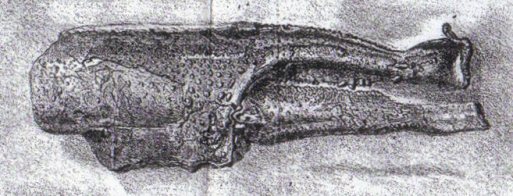
4). Hoplaria sp.? An apparently unique specimen figured in Dixon (1860), current whereabouts unknown. The expanded claw-tips may be an artefact of crushing (x 1.5).